Citroën 2CV revival targets a sub-€15,000 EV price
Citroën previews an electric 2CV with a sub-€15,000 price promise ahead of its Paris motor show appearance, reviving a landmark in affordable motoring.
 By Priya Malhotra · 5 min read
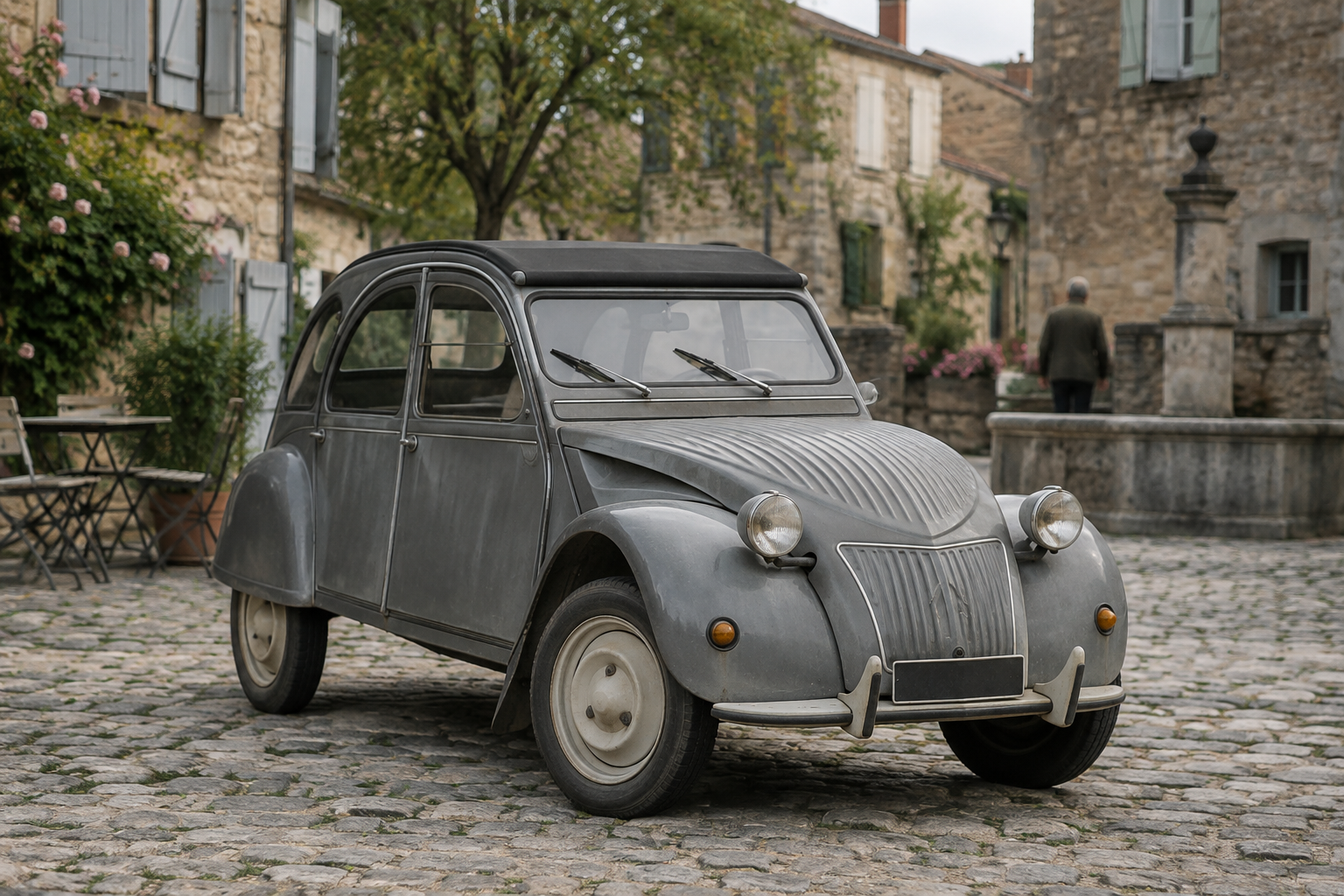
Citroën has released preview images of its electric 2CV revival ahead of an unveiling later this week, with the car also headed for next week's Paris motor show, according to Autocar.
Citroën previews an electric 2CV below €15,000
Citroën has previously committed to a price below €15,000, Autocar reports, quoting an approximate equivalent of £12,700. That sterling figure is a conversion, not a confirmed UK list price. It gives the revival a rather more demanding brief than merely looking charming outside a bakery: the new car has to make financial sense before nostalgia gets involved.
The expected position in Citroën's range is between the Ami quadricycle and the C3 supermini. That distinction matters: the Ami belongs to a different vehicle category from a conventional passenger car. The proposed 2CV would therefore address the space above Citroën's smallest electric transport, rather than simply replace it with something wearing a more recognisable face.
The photographs pick out raised, rounded headlamps on the front wings and pronounced ribs in the bonnet. Another visible detail is the gap separating the bonnet from the wings, echoing an air opening on later original cars. These are specific references to the old 2CV's construction, rather than just a familiar badge pasted onto an unrelated shape.
The wheels are large and styled to resemble steel items, with Michelin tyres fitted. Steel-style matters here: the report does not establish their material. Nor do the pictures establish how closely the eventual production specification will follow this preview. A photograph can reveal a styling decision; it is less helpful on the subject of the invoice.
How the original Citroën 2CV made simplicity useful
The original project took shape in the 1930s under the TPV name, short for Toute Petite Voiture, with inexpensive rural transport central to its purpose. Michelin had taken control of Citroën in 1934, making the tyre company's connection considerably deeper than a period-correct sidewall. The first 2CV emerged from a business trying to broaden access to motoring, not create a heritage accessory.
Citroën unveiled the production 2CV at the Paris motor show in 1948. Its first engine was a 375cc air-cooled flat-twin, giving the project a deliberately modest mechanical starting point. Air cooling meant there was no water-cooling radiator to maintain. That is the sort of simplicity the badge refers to: removing complication at the engineering stage, rather than merely decorating the result.
The original combined front-wheel drive with a four-speed gearbox and unusually long suspension travel. Its suspension linked the front and rear wheels on each side through spring units mounted along the chassis. That helps explain why the 2CV's identity has always involved the way it rides, not simply the way its bonnet looks. Replicating a silhouette cannot reproduce that mechanical character by itself.
Early cars paired a roll-back fabric roof with removable seating, giving a small vehicle useful flexibility without complicated folding mechanisms. The four-door body was similarly practical. These details made the 2CV adaptable despite its modest size and performance, and offer a more meaningful historical benchmark for the revival than whether its headlights provoke sufficient recognition.
Citroën broadened the family with the Dyane in 1967 and the Méhari in 1968, the latter using plastic bodywork over 2CV-related mechanicals. Those offshoots show how useful the underlying hardware became beyond one saloon. The relevant inheritance for a new entry-level model is that versatility, not an obligation to reproduce every corrugation in period steel.
Original 2CV production ended in July 1990, when the last example was built at Mangualde in Portugal. Later versions had grown to 602cc, but the engine remained an air-cooled twin. That leaves a substantial mechanical break between the historic car and the promised EV: the name is returning, not a lightly updated version of the old powertrain.
Autocar first reported plans for a 2CV revival in January 2025. The project therefore predates these teaser pictures, although a reported development programme, an exterior preview and a showroom-ready product are different stages. This latest material gives the idea a visible identity; it does not establish that customers will be able to buy precisely the car shown.
Xavier Chardon's 2CV pitch and the EU E-car proposal
Citroën chief Xavier Chardon describes the revival as “a true people's car designed for real life”, according to Autocar. His stated aim is to make electric motoring accessible to more European buyers. That is a claim about the customer base, not just the design department: pitching a car as basic transport invites scrutiny of what the cheapest version actually includes.
Autocar also reports that the car has been designed to take advantage of the EU's E-car proposal, intended to encourage sales of small electric vehicles built within the bloc. Proposal is the operative word: this is not confirmation of a final incentive scheme. The report does not establish what support an individual buyer might receive, and Citroën's price statement should not be converted into a promise of a particular grant.
Chardon also argues that straightforward operation matters more than piling on complexity. There is already a modern precedent for using an old small-car identity in an EV: Renault has revived the 5, while Fiat sells the electric 500e. Those examples establish the company the new 2CV will keep culturally, not a price or equipment match. Shared nostalgia does not make three cars equivalent purchases.
What the Citroën 2CV reveal still needs to establish
Autocar's report gives no production start date, assembly location or order-opening schedule. Those omissions leave the next practical questions nicely concrete: where will it be built, when can customers reserve one, and what specification will the quoted price buy? A motor-show unveiling can answer design questions without answering all three. A revival announcement is not a delivery slot.
Battery capacity, driving range, motor output and charging performance are also absent from the report. Those figures will determine which journeys the car can sensibly tackle and how much planning longer trips require. Exterior dimensions and luggage capacity remain unspecified too. Without them, it is too early to judge whether Citroën has recreated the original's useful accommodation or chiefly its visual references.
British buyers also still lack a right-hand-drive announcement or UK delivery schedule in this report. Those are practical questions distinct from the European policy discussion: incentives aimed at EU-built vehicles do not amount to a British sales commitment. Until those details arrive, the continental price should remain a question for Citroën UK, not a shopping instruction.
For anyone choosing between the revival and an original, the old car's separate steel chassis remains a crucial inspection point: corrosion there matters far more than a famous name returning to the news. This announcement offers no evidence of a change in classic 2CV values. Buy the old one on its condition and paperwork, not on hopes of an electric halo.
Timeline
- 1930sCitroën develops the TPV project, the inexpensive rural-transport concept that leads to the 2CV.
- 1948The production Citroën 2CV makes its debut at the Paris motor show.
- July 1990Original 2CV production ends at Mangualde in Portugal.
- January 2025Autocar first reports that Citroën is planning a 2CV revival.
Why this matters
For classic owners, this is a familiar badge being asked to do its original job under very different regulations and technology. The sub-€15,000 commitment makes affordability the test, rather than resemblance alone. Buyers should separate that European figure from any eventual UK offer, while owners of original 2CVs should resist reading a price boom into a teaser campaign. A successful revival would carry the old car's usefulness forward; it would not make a rusty chassis less rusty.
Your questions answered
- is citroen bringing back the 2cv
- Yes. Citroën has released preview images of an electric 2CV revival. Autocar reports that an unveiling and Paris motor show appearance are next, although a production start date is not specified.
- how much will the new citroen 2cv cost
- Citroën has stated a price below €15,000, according to Autocar. The report gives an approximate £12,700 equivalent, but that is a currency conversion, not a confirmed British showroom price.
- is the new citroen 2cv electric
- Yes. The revived 2CV will use electric power. Battery capacity, range, motor output and charging performance are not specified in Autocar's report, so the practical numbers remain under wraps.
- when will the new citroen 2cv be revealed
- Autocar places the unveiling later in the week of its report, followed by a Paris motor show appearance the next week. It does not supply a calendar date.
- will the new citroen 2cv be sold in the uk
- Autocar's report does not confirm right-hand-drive availability, a UK list price or British delivery dates. The European price commitment is not, by itself, a UK sales announcement.
- where does the new citroen 2cv fit in the range
- Autocar expects it to sit between the Ami quadricycle and the C3 supermini, filling the space between Citroën's smallest electric transport and its conventional small car.
- when was the original citroen 2cv made
- The original production 2CV was unveiled at the Paris motor show in 1948. Production ended in July 1990 at Mangualde, Portugal, after a remarkably long career in inexpensive motoring.
Sources
This is original reporting drawing on facts first published by:
Features Writer, Heritage
Priya MalhotraMotoring historian with a soft spot for Le Mans in the Sixties and anyone who raced on a shoestring.