1970 Lamborghini Miura P400S set for Bonhams Zoute sale
Bonhams will offer a yellow 1970 Lamborghini Miura P400S at The Zoute Sale on 11 October, with Swiss history and mechanical recommissioning required.
 By Callum Reid · 5 min read
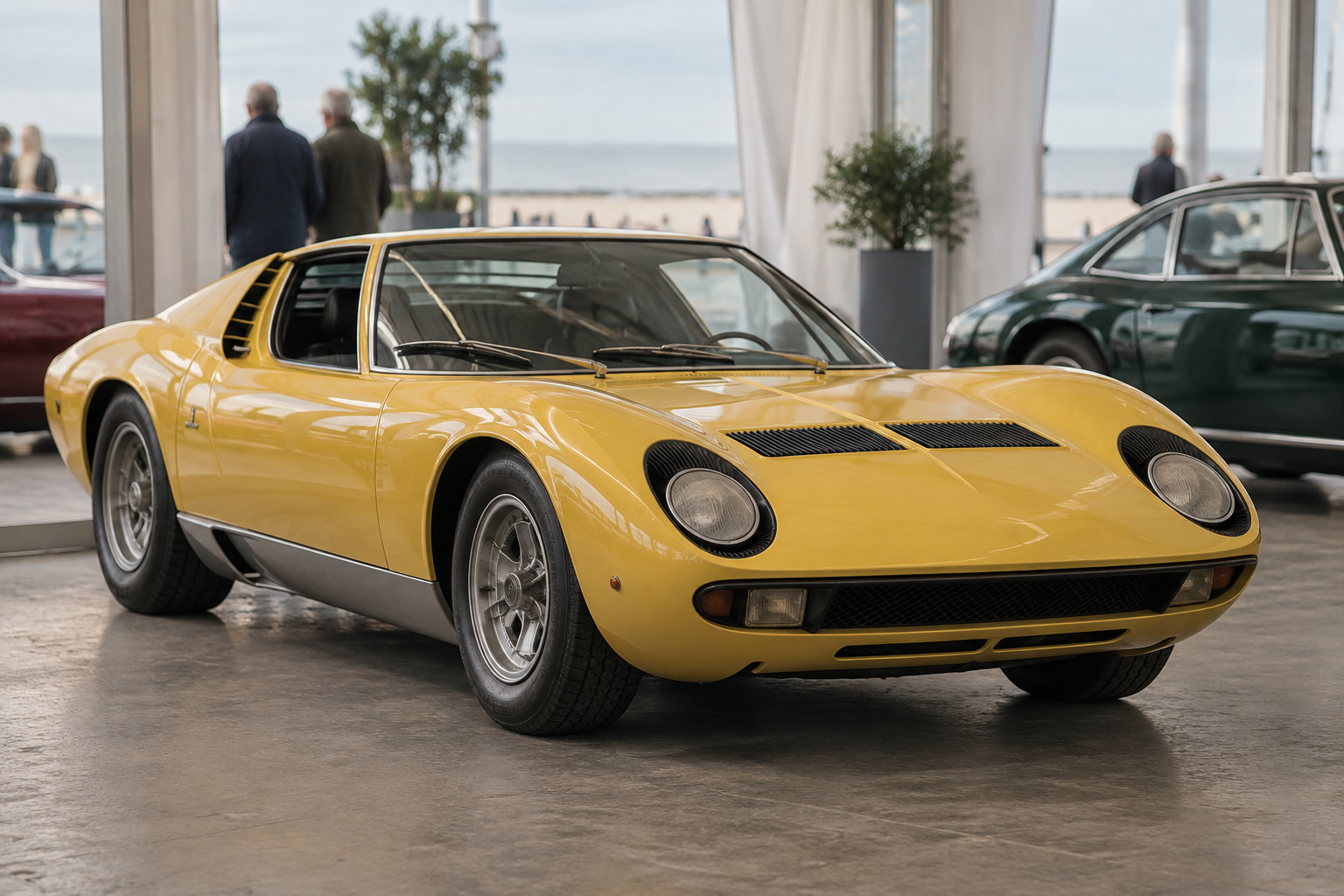
Bonhams Cars is due to offer a yellow 1970 Lamborghini Miura P400S, chassis 4578, at The Zoute Sale in Knokke-Heist, Belgium, on 11 October, according to Sports Car Digest. The reported estimate is $1.8 million–$2.3 million. This is not simply a question of whether the bidder likes yellow: the car has spent years in static storage and needs mechanical recommissioning before regular road use.
Bonhams' Zoute sale offers a late-specification Miura
The particular draw is its late P400S specification. Sports Car Digest describes this as one of approximately 140 examples fitted with ventilated brake discs, rather than a representative of the entire S production run. Those discs dissipate heat more effectively than solid equivalents, making the distinction relevant to driving as well as catalogue archaeology.
The report also identifies engine number 30354 as the car's original unit, supporting its matching-numbers description. That is a specific claim about identity, not a promise that every component remains as fitted in 1970. The black leather interior is said to be original too, with visible ageing: potentially valuable continuity in a car whose exterior has changed colour.
Its documented ownership trail remains strongly Swiss. A Zurich resident owned it between 1985 and 1995, and Martini Garage subsequently offered it to the present owner in late 2014 or early 2015. Those are useful points in the chain, although they should not be mistaken for a complete account of every owner or every mile travelled.
How the Lamborghini Miura P400S improved the original
Lamborghini was founded in 1963, and its first production road car, the 350 GT, followed in 1964 with its engine in the front. The Miura therefore represented a remarkably early change of direction for the young manufacturer. Rather than merely building another fast grand tourer, Lamborghini put the expensive machinery behind the occupants and made the layout part of the attraction.
The finished Miura appeared at the Geneva Salon in 1966. Gianpaolo Dallara led its development, while Marcello Gandini at Bertone supplied the shape. Its four-cam, 4.0-litre V12 sat transversely behind the cockpit, a packaging decision that distinguished it from the longitudinal mid-engined arrangements familiar in many later supercars. The engineering mattered as much as the eyelashes.
It was not the first mid-engined road car: the René Bonnet Djet had arrived in 1962. The Miura's achievement was to take that architecture into the V12 exotic-car arena, where the established front-engined formula still held considerable sway.
In original P400 form, the engine produced a quoted 350bhp and Lamborghini claimed a top speed of 290km/h, roughly 180mph. That last figure is a period claim, not a test result for chassis 4578. Even with that distinction observed, it explains why the Miura challenged the established Ferrari and Maserati order rather more forcefully than another handsome bonnet ever could.
The P400S arrived in 1968 with approximately 370bhp, a 20bhp increase, but its changes were not confined to the stopwatch. Electric windows, better interior appointments, wider tyres, revised exhaust routing and a quieter transmission broadened the brief. Lamborghini was refining something people actually had to sit in and operate, not just something designers could pin above their desks.
The subsequent P400SV appeared in 1971, and Miura production ended in 1973. That places a 1970 S within an evolving model family, rather than at either end of it. Its appeal rests on its particular specification and surviving identity; treating every Miura as mechanically interchangeable would erase precisely the distinctions collectors spend so much time examining.
Lamborghini's later anniversary editions offer another collecting route, exemplified by the UK-supplied Diablo SE30 heading to auction. The SE30 marked the company's 30th anniversary in 1993. This Miura's scarcity is different: the figure attached to it concerns a late-production technical specification, not a separately named anniversary model. Buyers need to know which sort of rarity they are being offered.
What the records say about Miura chassis 4578
Sports Car Digest reports that chassis 4578 was delivered to Swiss Lamborghini agent Foitek on 30 May 1970. Factory paperwork lists production number 533, whereas Bertone's records give body number 633. The report explains the difference as a known 100-number offset in Bertone's system, not evidence that two unrelated cars have somehow wandered into the same dossier.
The colour evidence is more interesting. Records attributed to Bertone, Lamborghini sales director Ubaldo Sgarzi and test driver Enzo Moruzzi identify the original finish as Arancio Miura, with Nero leather inside. In plain English, orange over black. The present yellow paint is therefore a later departure from the factory specification, even though the cabin reportedly preserves its original upholstery.
There is a wrinkle: a surviving copy of a 1970 invoice associated with Swiss racing driver and dealer Emmanuel ‘Toulo’ de Graffenried gives a conflicting description of the original colour. The published account favours the broader factory documentation. For a buyer, the sensible task is to inspect those documents together, rather than promote whichever sheet happens to support a preferred story.
The supporting file also includes a Swiss tax-paid form, historical records and a 2014 inspection invoice recording an examination by Valentino Balboni, Lamborghini's celebrated former test driver. That invoice is evidence of an inspection at a particular time. It is not described as a restoration certificate, nor does the report supply Balboni's findings or a current mechanical verdict.
What a Miura P400S buyer needs to check before driving
The car was reportedly running ahead of the sale, but a workshop assessment must establish what that means beyond an engine willing to start. On a P400S, the engine and gearbox share their oil supply, making lubrication history a particularly relevant enquiry. Fuel delivery, ignition and cooling also need checking before anyone confuses a successful start-up with dependable road use.
Tyres can age without wearing out their tread, and prolonged inactivity also makes brake hoses, seals and the fuel system sensible inspection priorities. These are checks, not diagnosed faults on this particular car. The account supplies no itemised repair estimate, so the cost of returning it to regular use remains an open question rather than an auction-day rounding error.
The Miura's steel chassis and aluminium front and rear clamshells call for a body assessment distinct from the mechanical inspection. Paint history cannot establish the condition of the structure beneath it. A buyer considering a return to orange would need to understand the existing finish and any previous repairs before commissioning work that might expand well beyond a colour change.
For a UK bidder, the published dollar estimate is only one line in the budget. The applicable buyer's premium, transport and any import charges need confirming separately. A Swiss tax-paid document does not by itself establish that every liability arising from a later cross-border purchase has been settled; Bonhams and a qualified import adviser are the places to resolve that.
Timeline
- 1966The finished Lamborghini Miura makes its debut at the Geneva Salon.
- 1968The P400S introduces approximately 370bhp and a broader package of comfort and mechanical refinements.
- 30 May 1970Chassis 4578 is delivered to Swiss Lamborghini agent Foitek.
- 1985–1995A Zurich resident owns the Miura during this documented stretch of its Swiss history.
- 2014An inspection invoice records an examination of the car by Valentino Balboni.
- Late 2014 or early 2015Martini Garage offers the Miura to its current owner.
- 11 OctoberBonhams Cars schedules chassis 4578 for The Zoute Sale; the published report does not state the year.
Why this matters
For collectors, chassis 4578 is a useful reminder that rarity, originality and readiness are three separate questions. Its late P400S brakes and reported original engine strengthen its historical appeal, while the colour change and storage history require different kinds of scrutiny. A UK buyer must also look beyond the dollar estimate to fees, transport and potential import charges. The opportunity is a significant early Lamborghini with a substantial paper trail; the sensible budget includes making it usable, not merely winning it.
Your questions answered
- when is the lamborghini miura p400s being auctioned
- Bonhams Cars has scheduled chassis 4578 for The Zoute Sale on 11 October in Knokke-Heist, Belgium. The published report does not specify the auction year.
- how much is the bonhams lamborghini miura p400s estimated to sell for
- The reported estimate is $1.8 million–$2.3 million. That is neither a sale result nor an all-in bill: buyers still need to establish fees, transport costs and any applicable import charges.
- why is this lamborghini miura p400s rare
- It is described as one of approximately 140 late-production P400S examples fitted with ventilated brake discs. That figure concerns a particular specification, not total P400S production.
- is the bonhams miura p400s matching numbers
- According to Sports Car Digest, the documentation supports its matching-numbers description and identifies engine number 30354 as original. That establishes an identity claim, not a guarantee of mechanical condition.
- what colour was lamborghini miura chassis 4578 originally
- Factory-related records identify Arancio Miura orange paint and Nero black leather. It is now yellow and reportedly retains its original upholstery. A separate 1970 invoice conflicts over the original colour, so the paperwork deserves careful reading.
- does the 1970 miura p400s need restoration
- Mechanical recommissioning is required before regular road use. It reportedly ran before the auction, but the account gives no itemised repair budget or stated requirement for a full restoration.
- what is the difference between a miura p400 and p400s
- The P400S arrived in 1968 with approximately 370bhp against the original P400's 350bhp, plus electric windows, interior improvements and other refinements. Late P400S examples also gained ventilated brake discs.
Sources
This is original reporting drawing on facts first published by:
News Editor
Callum ReidGlasgow-born newsroom veteran covering the laws, policy and industry moves that affect classic owners.