Lunaz Range Rover Classic sells out US allocation
Lunaz plans more Silverstone staff and shifts after its US Range Rover Classic allocation sold out, with vivid Kermit and quieter Nevada builds.
 By Tom Pendry · 5 min read
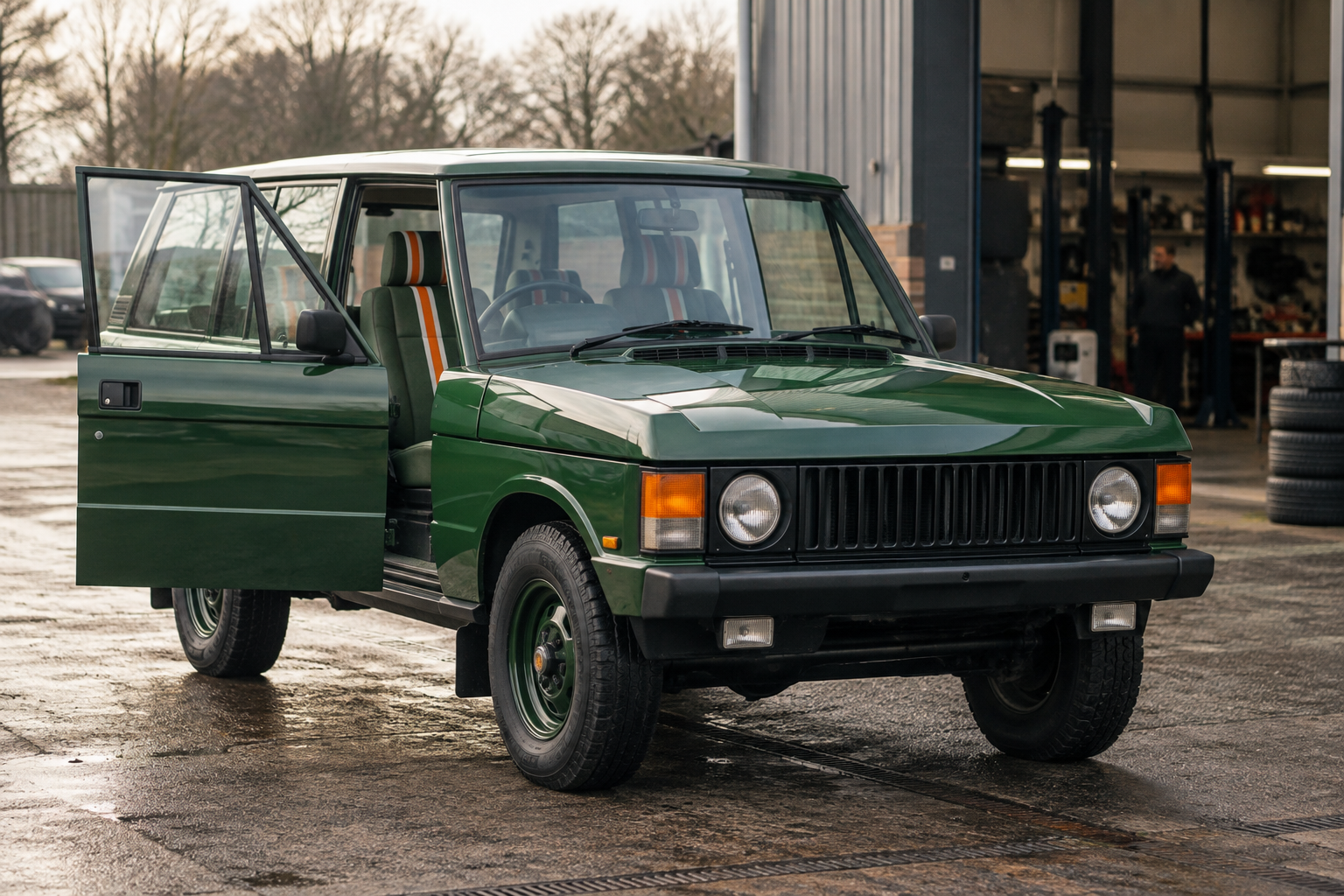
Lunaz has announced plans to double shifts and its workforce at Silverstone, England, after selling out the US allocation for its founding Range Rover Classic series. The announcement accompanies the unveiling of two electric commissions, the vividly green Kermit and rather more restrained Nevada.
Lunaz expands as Kermit and Nevada mark US demand
According to autoevolution, the United States has become Lunaz’s largest international growth market, despite its recent arrival there. Robb Report says the response is prompting the additional staffing and shifts. Neither report supplies a headcount or the number of American allocations, so the announcement cannot be translated into a reliable annual production figure.
Kermit began as a black-on-black Overfinch Range Rover, according to autoevolution. Its transformation therefore starts with a car already altered from standard, rather than an untouched factory specimen. Lunaz has given the four-door a vivid green exterior and a Pop Art-inspired treatment: discretion was plainly not on the commissioning brief.
That green continues inside, where white and orange stripes interrupt the seats and orange safety harnesses add another decidedly non-agricultural detail. Robb Report describes the cabin’s colour scheme as part of the same commission, rather than a separate styling exercise. It is hard to imagine mislaying this one in an airport car park.
Nevada takes its direction from the client’s home landscape, with a bespoke dark green developed to suit that setting. Inside are ivory leather, woven inserts with a heritage flavour, hand-finished timber and earthy colours. The textiles extend through the seats, giving the cabin a different character from Kermit without relying solely on another tin of paint. Both commissions use electric power.
Why the original Range Rover suits a bespoke rebuild
The Range Rover project took shape in the mid-1960s under Rover engineer Charles Spencer “Spen” King, with the ambition of combining car-like comfort and Land Rover capability. It reached production in 1970 as a two-door. That dual purpose explains much of its lasting appeal: the proportions belong to a working vehicle, but the underlying idea was never simply a farm truck with better upholstery.
The early car used coil-spring suspension, permanent four-wheel drive and Rover’s 3.5-litre V8. Those were fundamental ingredients, not decorative nostalgia: the chassis had to work on rough ground without delivering a farm implement’s ride on tarmac. Replacing the engine is therefore only one part of reworking a Classic; brakes, suspension and control systems belong in the conversation too.
A factory four-door followed in 1981, and the first generation remained in production until 1996. That lengthy production run matters when discussing commissions today. “Range Rover Classic” describes a family of vehicles developed over decades, not one uniform donor specification; an early two-door and a later four-door start from different points.
Founded in 2018, Lunaz established itself through electric conversions of British classics, including the Aston Martin DB5. According to the company information reported by Yahoo Autos, its Silverstone operation handles restoration, fabrication, paint preparation, wiring, trimming and final assembly in-house. The finished vehicle is consequently the result of a substantial restoration programme, not merely an engine removal and a battery installation.
The advertised Range Rover upgrades include revised suspension geometry, improved brakes, front and rear anti-roll control, climate control, heated seats and upgraded audio. There is a useful distinction from the Defender Works V8 conversion programme for existing owners: that initiative comes from Land Rover, whereas this is an independent specialist’s interpretation of another model. Shared British ancestry does not make the two programmes interchangeable, particularly when comparing specifications and support arrangements.
What Lunaz says about demand, power and pricing
Lunaz attributes interest to a new generation of collectors attracted by the Classic’s recognisable design, according to autoevolution. It also reports growing interest in its Bentley, Rolls-Royce, Jaguar and Aston Martin work. Those are company assessments rather than independent market measurements; a full allocation at one specialist does not establish the health of the entire restomod trade.
The output claim is substantial: autoevolution reports more than 350hp for both the electric and V8 powertrains. No directly comparable range, acceleration or consumption figures appear in these reports. Buyers therefore have a power headline, but not enough data to settle the petrol-versus-battery argument over lunch. Horsepower alone will not tell an owner which version best suits their journeys.
Robb Report says Lunaz previously described typical commissions as costing between $600,000 and $1 million, without announcing a price for the next Range Rover series. That is general guidance, not a quotation for Kermit or Nevada. Commissioning one is also a different purchasing exercise from bidding on a car such as the 1970 Lamborghini Miura P400S headed for Bonhams Zoute: the buyer is specifying restoration work, not simply choosing an existing auction lot.
Nor does an electric powertrain define a price bracket. The proposed Citroën 2CV revival targeting less than €15,000 has radically different ambitions. Its target is not a confirmed transaction price either, but the contrast demonstrates why “electric classic” is a description of propulsion and inspiration, not a useful shorthand for affordability.
The next 25 Lunaz Range Rover Classics and buying checks
For buyers looking beyond the founding allocation, autoevolution reports a new series of 25 commissions, announced on 18 September. That figure describes the series, not a disclosed number of American slots. Robb Report says prospective customers are already being shown previews of what follows; availability for an individual specification still needs confirming directly with Lunaz.
The reported choices include two-door, four-door and long-wheelbase versions, with a convertible available by request. Electric power sits alongside a naturally aspirated V8 option. Door count, wheelbase and roof treatment are separate specification questions, so buyers should establish the actual proposed donor and body configuration rather than assume every combination is available. A roofless commission is not simply another paint option.
American customers also face separate federal safety and emissions questions. The Yahoo Autos report highlights NHTSA’s 25-year age exemption from current federal safety standards, measured from manufacture, and the EPA’s separate 21-year exemption for vehicles in original, unmodified configuration. Replacement powertrains require closer examination; the donor’s birthday should not be treated as blanket clearance for whatever now lives beneath its bonnet.
State registration requirements can differ too. Lunaz states that it restores and modifies existing vehicles, does not manufacture new vehicles, and is neither affiliated with nor endorsed by Land Rover. Those distinctions belong in a buyer’s paperwork discussion, not just the website footer. An experienced import specialist should establish the applicable route before a completed commission is shipped across the Atlantic.
Lunaz also warns that specifications may change. Before committing, buyers should obtain a written build specification, delivery terms and clear warranty arrangements, then ask who can diagnose faults and supply replacement components locally. Wiring documentation, battery support for electric cars, and repair arrangements for bespoke trim deserve attention alongside the colour samples. The sensible moment to discuss a replacement orange harness is before needing one.
Timeline
- Mid-1960sSpen King develops the Range Rover concept around road comfort and off-road capability.
- 1970The original Range Rover launches as a two-door.
- 1981A factory four-door Range Rover joins the range.
- 1996Production of the first-generation Range Rover ends.
- 2018Lunaz is founded.
- 18 SeptemberLunaz announces a new Range Rover Classic series limited to 25 commissions, according to autoevolution.
Why this matters
For classic owners and buyers, Lunaz’s expansion signals demand for its particular kind of bespoke restoration, not a new price guide for every old Range Rover. The petrol option also broadens a business once identified with electric conversions. What matters at this level is the whole package: the donor, engineering, agreed specification and support after delivery. A full order book is encouraging; it is no substitute for knowing who will fix your very individual car in five years.
Your questions answered
- has the Lunaz Range Rover Classic sold out
- Lunaz says its founding series’ US allocation has sold out. That does not mean the programme is finished: prospective customers are being shown a further series, reported to comprise 25 commissions.
- how much does a Lunaz Range Rover Classic cost
- Pricing for the next series has not been announced. Robb Report says Lunaz previously put typical commissions at $600,000 to $1 million, but that is broader guidance, not a confirmed price for these Range Rovers.
- is the Lunaz Range Rover Classic electric or V8
- Buyers are offered electric power or a naturally aspirated V8, both reportedly producing more than 350hp. The showcased Kermit and Nevada commissions are electric.
- what is the Lunaz Kermit Range Rover
- Kermit is a vivid green, four-door Range Rover Classic electric restomod. It began as a black-on-black Overfinch vehicle and now has a green cabin with white and orange seat stripes and orange safety harnesses.
- where are Lunaz Range Rovers built
- Lunaz restores and modifies existing Range Rovers at Silverstone, England. Its in-house operations include fabrication, paint preparation, wiring, trimming and final assembly.
- how many Lunaz Range Rover Classics will be made
- The new series announced on 18 September is reported to comprise 25 commissions. That is not a stated lifetime production total or a disclosed count of US allocations.
- can you get a convertible Lunaz Range Rover
- A convertible is reported to be available by request. Other choices include two-door, four-door and long-wheelbase versions, although buyers should confirm which configurations are available for their commission.
- is Lunaz affiliated with Land Rover
- No. Lunaz states that it is neither affiliated with nor endorsed by Land Rover. It restores and modifies existing vehicles rather than manufacturing new Land Rover vehicles.
Sources
This is original reporting drawing on facts first published by:
Senior Writer, Restoration
Tom PendryEx-workshop foreman who reckons the best stories start under a car, not beside it.